Free Shipping Over £30

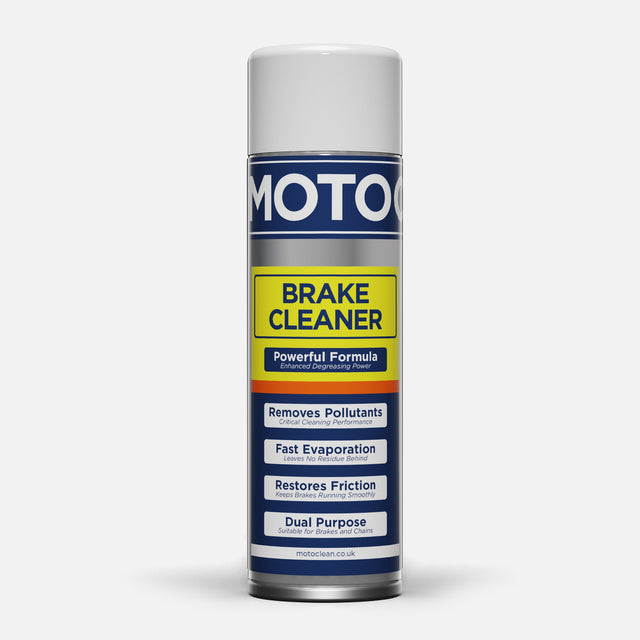
Motorcycle Brake Cleaner 500ml

SKU: MC-B2-500ML
Regular price £9.99
Tax included Shipping calculated at checkout.

MotoClean™ Motorcycle Brake Cleaner quickly removes contaminants, including dirt, dust, carbon, and oil build-ups. Fast drying with no residue, can be used on disc brakes and other suitable components requiring a deep clean. read more

Removes Pollutants

Easy to remove brake dust, grease, and dirt for optimal performance.

Fast Evaporation

Quick-acting cleaner which instantly restores key components.

Restores Friction

Brake cleaner restores friction by removing contaminants and reduces squeaking.

Dual Purpose

Also suitable for cleaning other motorcycle components.

Specifications

  • Volume
    500ml
  • Dimensions
    63 x 63 x 240 mm
  • Weight
    240 g

Reviews (5)

Customer Reviews

Based on 5 reviews
0%
(0)
40%
(2)
60%
(3)
0%
(0)
0%
(0)
P
Peter
Good delivery.

Good delivery, l have not used it yet.

P
Peter Lawson
Happy with it

Bought on a bundle with some other products, seems like good valiue, might of worled slighty better than others

N
NigeReviews
Nice Cans

liked the look of can, works well and would recommend

L
LondonLad82
Better than OK

I dont have much to say about brake claeenr but seems like a good product

K
Kevin P.
Does what it says

As good a s the rest, seem like fair value for a aersol version

Documents

Product Info

Description

Fast-drying motorcycle brake cleaner for discs, calipers and brake components.

MotoClean Motorcycle Brake Cleaner quickly removes brake dust, dirt, grease, oil and other contaminants from motorcycle braking components. The fast-drying formula evaporates quickly and leaves no residue behind, helping keep your brakes clean and performing as they should.

Ideal for routine maintenance, servicing or cleaning after wet and dirty rides.

Why use MotoClean Motorcycle Brake Cleaner?

  • Fast-acting cleaning: Cuts through brake dust, grease, oil and built-up grime.
  • Fast drying: Evaporates quickly without leaving behind an oily residue.
  • For motorcycle brake components: Suitable for cleaning brake discs, calipers and other appropriate braking components.
  • Easy to use: The aerosol spray makes it easy to target difficult-to-reach areas around the braking system.
  • 500ml can: Ideal for keeping in the garage for regular motorcycle maintenance.

How to use motorcycle brake cleaner

Spray directly onto the brake component to remove dirt, brake dust and contamination. Allow the cleaner to work and evaporate fully before using the motorcycle. For heavier deposits, repeat the process as required.

Keep your motorcycle brakes clean

Brake components are constantly exposed to road dirt, brake dust and grime. Regular cleaning helps prevent contamination building up around the braking system and should form part of normal motorcycle maintenance.

Size: 500ml

How To Use

How do I use brake cleaner on my motorcycle?

Step 1: Remove the brake components if necessary for thorough cleaning.

Step 2: Shake the can of brake cleaner well.

Step 3: Spray the brake cleaner directly onto the brake parts to remove contaminants.

Step 4: Allow the cleaner to evaporate or wipe it off with a clean, dry cloth.

Step 5: Reassemble the brake components if they were removed.

Product FAQ

1. What is motorcycle brake cleaner used for?

Motorcycle brake cleaner is used to clean brake components such as brake pads, rotors, calipers, and other related parts. It removes brake dust, grease, oil, and other contaminants that can impair braking performance.

2. Can I use regular brake cleaner on motorcycle brakes?

Yes, most automotive brake cleaners are safe to use on motorcycle brakes as well. However, it’s always best to check the label to ensure compatibility with motorcycle components.

3. Is brake cleaner safe on all motorcycle parts?

Brake cleaner is safe for most metal parts, but it may damage painted surfaces, rubber, and plastic components. Avoid spraying it on non-brake-related parts, and if you do, wipe it off immediately.

4. Can brake cleaner damage motorcycle brake pads?

Brake cleaner is generally safe for brake pads, as it evaporates quickly and doesn’t leave a residue. However, it’s important to apply it sparingly and avoid prolonged soaking, which could potentially affect the pad material.

5. How often should I use brake cleaner on my motorcycle?

Use brake cleaner as needed, typically during routine maintenance, brake pad replacement, or whenever you notice a buildup of brake dust or grime. Cleaning your brakes regularly helps maintain optimal braking performance.

6. Can brake cleaner fix squeaky brakes on a motorcycle?

While brake cleaner can help remove contaminants that cause squeaking, it won’t fix all types of brake noise. If the squeaking persists after cleaning, it could be due to worn brake pads, misalignment, or other mechanical issues.

7. Is brake cleaner flammable?

Yes, most brake cleaners are highly flammable. Use them in a well-ventilated area away from open flames, sparks, or other ignition sources.

8. Can I use brake cleaner on other parts of my motorcycle?

Brake cleaner is specifically formulated for brake components. While it can be used to clean metal surfaces, it’s not recommended for use on plastic, rubber, or painted parts due to its harsh solvents.

9. What should I do if I accidentally spray brake cleaner on paint or plastic?

If you accidentally spray brake cleaner on paint or plastic, immediately wipe it off with a clean cloth and wash the area with water. Brake cleaner can damage these surfaces if left untreated.

10. Can I use brake cleaner to clean my motorcycle chain?

It’s not recommended to use brake cleaner on a motorcycle chain as it can strip away the lubricants and potentially damage the O-rings or X-rings in the chain. Use a dedicated chain cleaner instead.

How to Use Brake Cleaner on a Motorcycle
MOTORCYCLE CARE GUIDE

How to Use Brake Cleaner on a Motorcycle

Motorcycle brakes collect dust, dirt, grease and road grime. Here's how to use brake cleaner correctly, what parts to clean and what to avoid spraying.

READ THE GUIDE →